
By Community Arts Council of Richmond · October 16, 2026
Deadlines checked on October 16, 2026.
Most calls for artists in Richmond and Metro Vancouver are posted in a handful of places: the City of Richmond's public art page, the BC Alliance for Arts + Culture's calls board, the Richmond Arts Coalition's opportunities page, and the websites of the galleries and arts councils that run juried shows. Checking those once a month will catch most of what is open.
• Richmond's paid public art calls are on the City's Artist Calls page; email PublicArt@richmond.ca to receive notices.
• The BC Alliance for Arts + Culture lists calls across the province and won't post opportunities that make artists pay to exhibit.
• Before you apply, check who is jurying, what any entry fee pays for, and how your work is insured and returned.
Where can Richmond artists find calls for artists?
Three places cover most local opportunities:
- City of Richmond Public Art Program. The City's Artist Calls page posts paid commissions and standing rosters. These include a Community Mural Artist Roster for BC residents, an Urban Infrastructure Art roster for Richmond residents with projects from $500 to $2,500, and Engaging Artists in Community projects for BC residents with budgets of at least $10,000. To hear about new calls, email PublicArt@richmond.ca and ask to join the list. Open at the time of writing is the 2027–2028 No. 3 Road Art Columns call for Richmond residents, with a $1,500 artist fee, closing October 29, 2026.
- Richmond Arts Coalition. Its opportunities page gathers calls for visual artists, performers and writers, plus grants, scholarships and residencies. The City's public art page also recommends the Coalition's e-news.
- The Community Arts Council of Richmond. We post our own calls, for Shades of Fall and Faces of Richmond, on our news page.
Where to look across Metro Vancouver and BC
- BC Alliance for Arts + Culture. Its Calls for Artists board lists each call with the organisation and deadline, and removes it after the deadline. The Alliance only posts opportunities where artists are paid for taking part, and turns away calls that charge artists to exhibit.
- City of Vancouver. Vancouver's calls for artists page lists its public art calls and ongoing artist programs. Some calls are open only to artists from specific communities, so read the eligibility first.
- Federation of Canadian Artists. The Vancouver-based federation runs juried exhibitions through the year. Some are open to non-members for a slightly higher fee: its 2026 "Limitless" show charges $25 for the first entry ($5 more for non-members) and closes November 12, 2026.
- Akimbo. For competitions across Canada, Akimbo's call for submissions listings cover the whole country.
How does a juried art show work?
In a juried show, a panel of jurors, usually artists, curators or collectors, chooses which entries are shown and which win awards. You answer a published call (often called a prospectus) by sending images of your work, and sometimes a statement and a fee. The jury makes its selection, the organiser tells you the result, and accepted work is delivered, hung, shown and returned. In an open show, every eligible entry is shown.
CARFAC Maritimes, part of the national association representing Canada's professional visual artists, publishes guidance on what a good call contains: the jurors' names, any fees, eligibility and media limits, insurance, awards and return dates. It recommends at least two months' notice for a local show and three for a national one. It also says organisers should stay out of the jury's decisions and insure accepted work at full value while they hold it.
Some juries work anonymously. The Salt Spring National Art Prize, a national competition run from Salt Spring Island with $52,000 in awards, picks a new jury of four artists, curators and collectors for each exhibition, and hides artists' names while finalists are chosen. Its jury also reads each artist's statement alongside the work, even though the statement isn't scored. Our guide to writing an artist statement and bio can help with that part.
What a juried show looks like from the inside
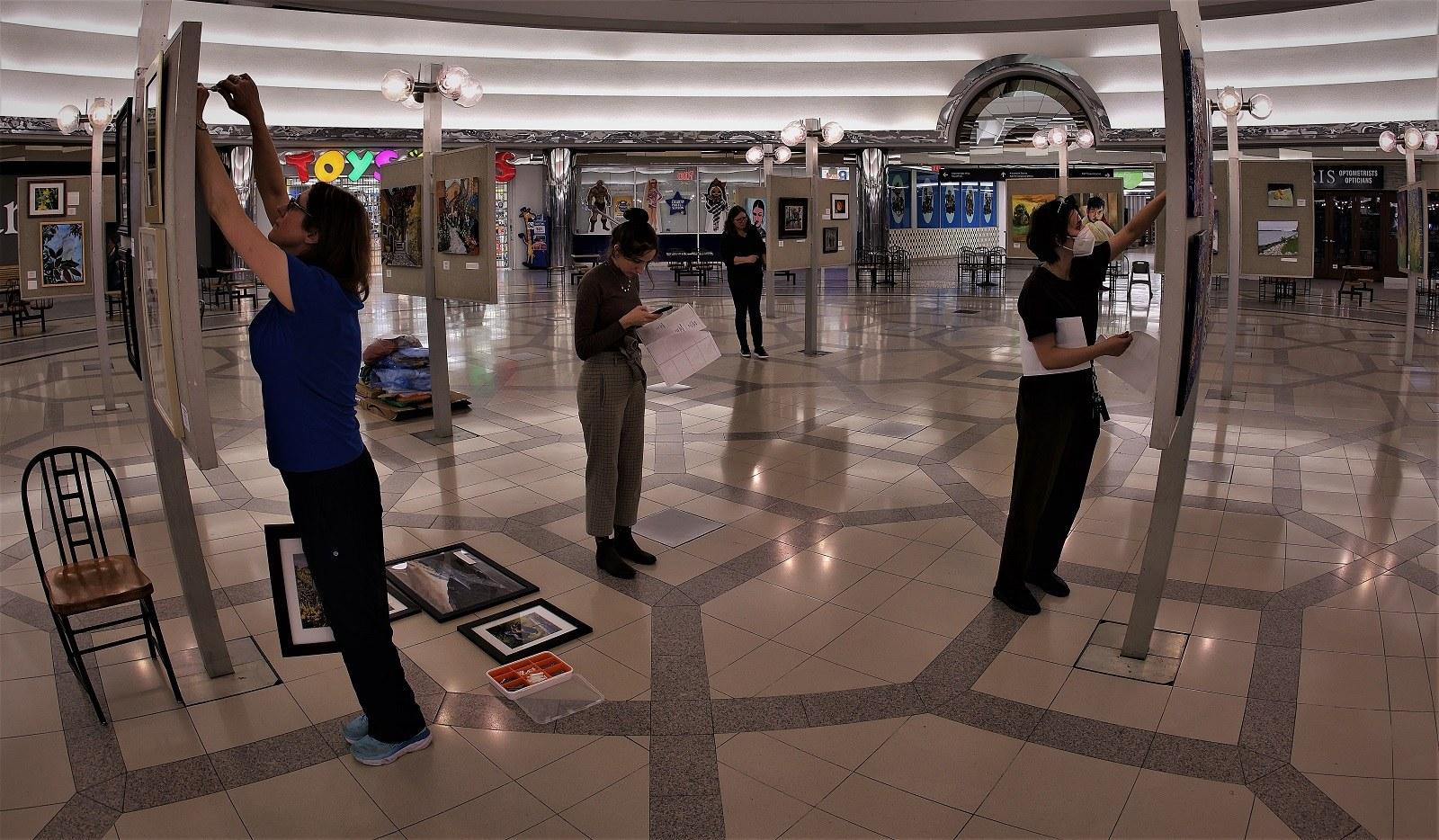
Shades of Fall, our seasonal juried exhibition, shows how this works at a community scale. In 2025 our adjudicator judged 68 entries and named winners in drawing and painting, photography, mixed media and textiles, plus a People's Choice award.
The 2026 exhibition runs November 6 to 8 at Lansdowne Centre (Centre Court, 5300 No. 3 Road), with live music from the Camilli String Trio, and it is free to visit. Entries are open to Richmond artists, members and non-members alike, and this year's call added a youth category.
Our other signature show, Faces of Richmond, works differently: volunteer artists paint portraits of Richmond seniors, shown alongside recorded interviews with them. The next exhibition is planned for April 2027; watch our news page for the call.
Are entry fees for art shows normal?
Entry fees are common, but artists' organisations question them. CARFAC Maritimes' guidance for juried exhibitions states that "payment of entry fees is considered inappropriate" for professional artists, and says exhibitors should be paid exhibition fees under CARFAC's minimum fee schedule. Community shows run by volunteers often charge a modest fee to cover awards, venue and insurance.
Either way, a good call tells you what your fee pays for. Look for named jurors, awards or artist fees, insurance while your work is in their care, and clear dates for delivery and pick-up. Be wary of any call where the main thing being sold is wall space, with no jury, no awards and no audience.
Before you apply: a checklist
- Read the eligibility first: where you must live, which media are accepted, and whether you need to be a member.
- Note the exact deadline. Many calls close at 11:59 pm on the final day.
- Prepare clear, well-lit photos of your work, plus a short statement and bio.
- Check the fee and what it covers.
- Check delivery, pick-up, insurance and whether work can be sold.
- Keep a simple record of what you sent where, and when you'll hear back.
Frequently asked questions
Where can I find open calls for artists in Richmond, BC?
Check the City of Richmond's Artist Calls page, the Richmond Arts Coalition's opportunities page and our news page. At the time of writing, the City's 2027–2028 No. 3 Road Art Columns call is open to Richmond residents until October 29, 2026, with a $1,500 artist fee.
Do galleries pay artists to exhibit?
Publicly funded galleries in Canada are expected to pay exhibition fees at CARFAC's minimum rates when work is shown but not offered for sale. CARFAC compares its schedule to a minimum wage for artists. The BC Arts Council's grant for established visual artists asks applicants to show exhibitions where they were paid CARFAC-level fees.
How do I find art competitions in Canada?
Akimbo lists calls nationally, and the BC Alliance for Arts + Culture covers the province. National prizes post their own calls: the Salt Spring National Art Prize, for example, charges $35 per entry and opens its 2027 call on January 3, 2027.
What is the difference between a juried and an open show?
In a juried show, a panel chooses which entries are exhibited and which win awards. In an open show, every eligible entry is shown. Juried shows usually carry more weight on an artist's CV.
Want to take part in member exhibitions? Join as a Participating member ($35 a year), which also gives you a public artist profile.
Sources, checked October 16, 2026: City of Richmond, Artist Calls; BC Alliance for Arts + Culture; Richmond Arts Coalition; Federation of Canadian Artists; CARFAC Maritimes, Organization of Juried Group Exhibitions; CARFAC, Minimum Recommended Fee Schedule; Salt Spring National Art Prize; BC Arts Council, 2026/27 Visual Artists guidelines.